



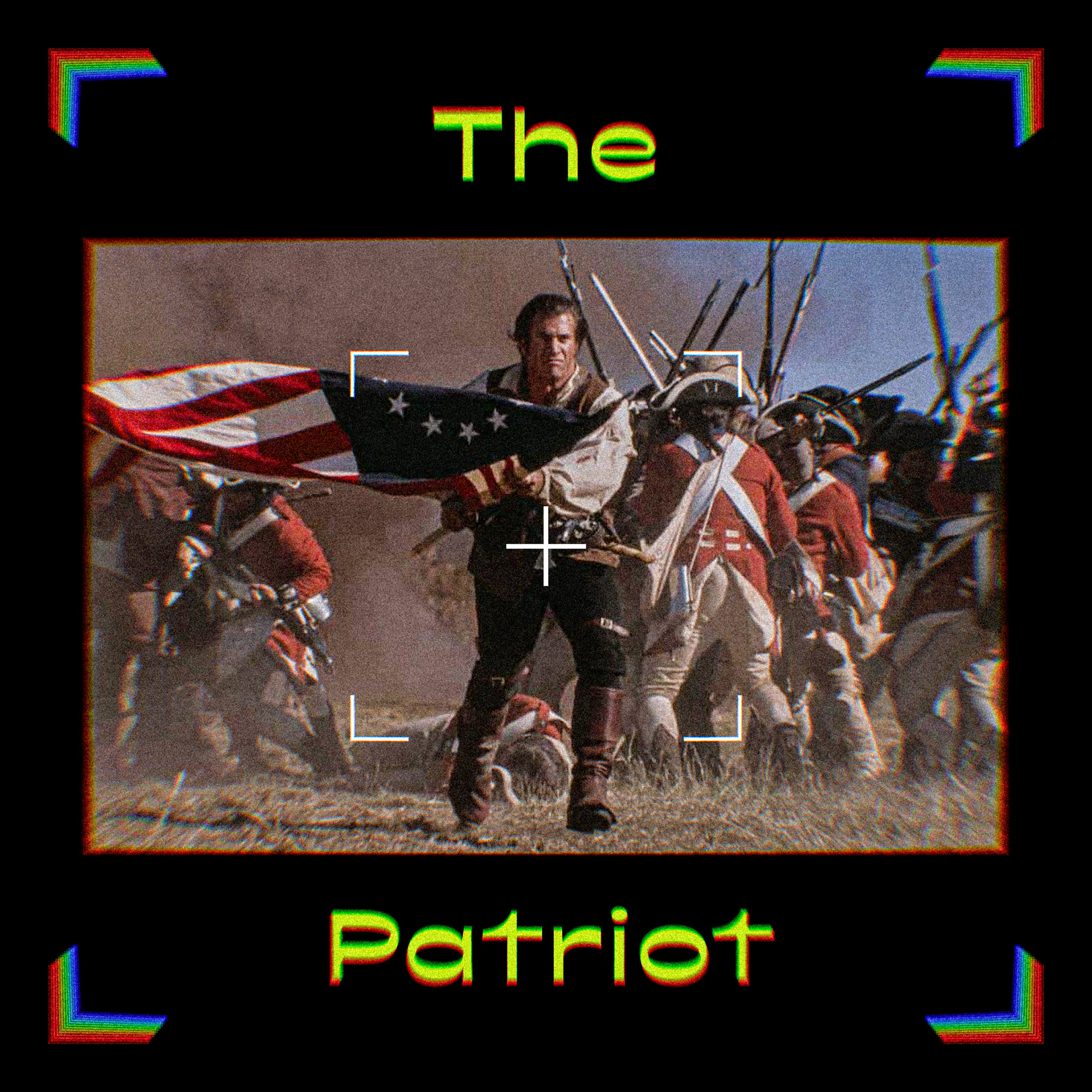
Van and Lyle are joined by historian Graeme Pente to revisit Roland Emmerich’s The Patriot, a Revolutionary War epic that filters eighteenth-century civil war through the moral grammar of Braveheart-era melodrama. Mel Gibson’s Benjamin Martin begins as a wary antiwar planter—“Why should I trade one tyrant 3,000 miles away for 3,000 tyrants one mile away?”—only to be pushed into righteous vengeance by British atrocity.
The film’s structure is simple: Reluctant hero, violated hearth, purified violence. But as Graeme helps unpack, the simplicity comes at a cost. The real war in the Carolinas was brutal, intimate, and frequently indistinguishable from banditry. The movie knows this just enough to gesture at it (hangings, burnings, neighbor against neighbor) before smoothing the rough edges into nationalist myth.
Much of our discussion turns on the figure Martin is loosely based on: Francis Marion, the “Swamp Fox.” The film recasts him as a tormented but noble patriarch, haunted by a single episode of past excess. History is less forgiving. Marion was a slaveholder who participated in campaigns against the Cherokee and whose conduct, like that of many irregular fighters on both sides, blurred the line between resistance and reprisal.
The Patriot stages atrocity as a tragic rite of passage. Good men do terrible things, feel remorse, and are absolved by history. That structure mirrors a broader American habit whereby violence becomes regrettable but necessary, morally metabolized through individual guilt rather than collective reckoning. At the same time, the film’s most revealing line—Cornwallis blaming Tavington’s brutality for creating “this ghost”—captures how repression manufactures insurgency.
We also linger on what the film erases. Its fantasy of harmonious plantation life, its depiction of enslaved people as effectively free laborers, its climactic embrace of conventional battlefield glory after two hours of guerrilla tactics. The Battle of Cowpens becomes a redemptive tableau, with Martin hoisting the flag as if the war’s contradictions can be unified by sheer will. In the final scenes, a formerly enslaved man cheerfully returns to help “build a new world,” a gesture that reads less like reconciliation than wish fulfillment. For all its bombast and bloodletting, The Patriotoffers comfort: Empire is bad when British (or fill in the blank), virtuous when American.
Further Reading
“The Swamp Fox” by Amy Crawford
The Counter-Revolution of 1776 by Gerald Horne
The Internal Enemy by Alan Taylor
The Radicalism of the American Revolution by Gordon S. Wood
The American Revolution by Ken Burns and Sarah Botstein
Teaser from the Episode
The Patriot Trailer


