



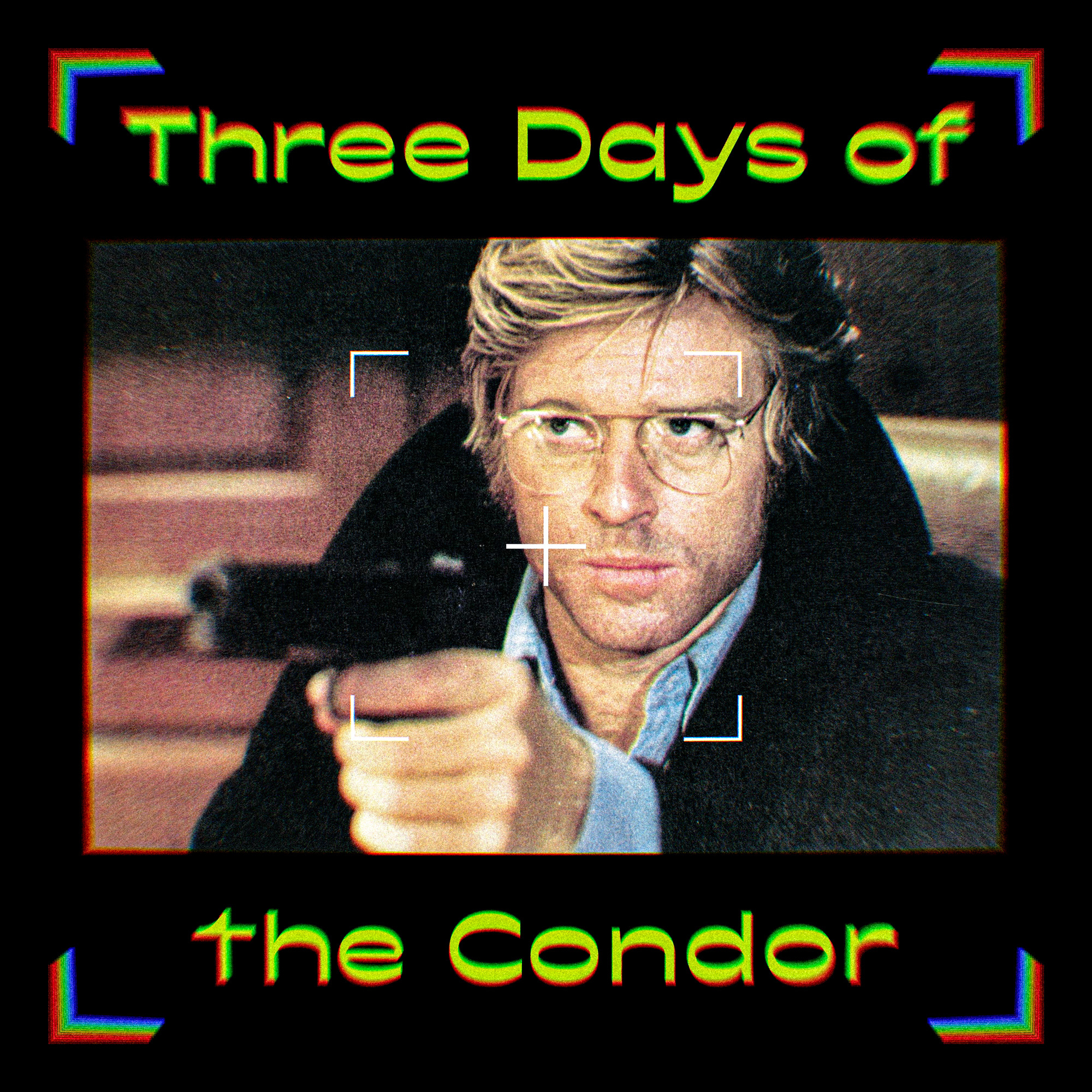
Van and Lyle are joined by returning guest Matt Duss—former foreign policy advisor to Senator Bernie Sanders and current executive vice president at the Center for International Policy—to revisit Sydney Pollack’s Three Days of the Condor, a paranoid thriller that captures a vanishing moment when American institutions still feared exposure. Robert Redford’s Joe Turner is no action hero but a reader, an analyst, a man whose job is to interpret texts rather than enforce power. When his CIA front office is wiped out in broad daylight, the shock is not just the violence, but how casually it is absorbed by “the community,” a euphemism so bland it becomes obscene. This is a film less about rogue evil than about bureaucratic normalcy, where murder is a logistical inconvenience and accountability a procedural error.
What gives Condor its present-day melancholy is its faith that truth, once surfaced, still matters. The film’s final wager rests on the idea that the press, embodied by The New York Times, might still function as a check on clandestine empire. “They’ll print it,” Turner insists. The ending leaves that faith unresolved, but history has not been kind to it. We contrast the film’s hopeful premise with the Times’ recent “Overmatched” series on U.S. military power and China, which dresses escalation in the language of sober realism. Rather than interrogating militarism, the series laments America’s supposed weakness while advocating more spending, more production, and deeper entrenchment in a defense-industrial oligopoly. Condor imagined exposure as a threat. Today, exposure is often indistinguishable from advocacy.
The conversation widens to the economic and ideological machinery behind permanent war: Consolidation among defense contractors, the fetishization of exquisite platforms over mass production, and the quiet assumption that U.S. global dominance is both natural and necessary. Where Condor traces an oil conspiracy hidden just beneath the surface, our present feels almost worse, one in which the logic of empire no longer requires secrecy at all. Joubert’s cold observation that he only cares about “how much” now sounds less like villainy than candor. In that sense, Three Days of the Condor is not cynical enough. Its tragedy lies in believing that revelation alone could still interrupt the system it so clearly understood.
Recommended Reading / Viewing
Matt at the Center for International Policy
“Overmatched: America’s Military Is No Longer the World’s Best”
Bland Fanatics by Pankaj Mishra
The Jakarta Method by Vincent Bevins


