


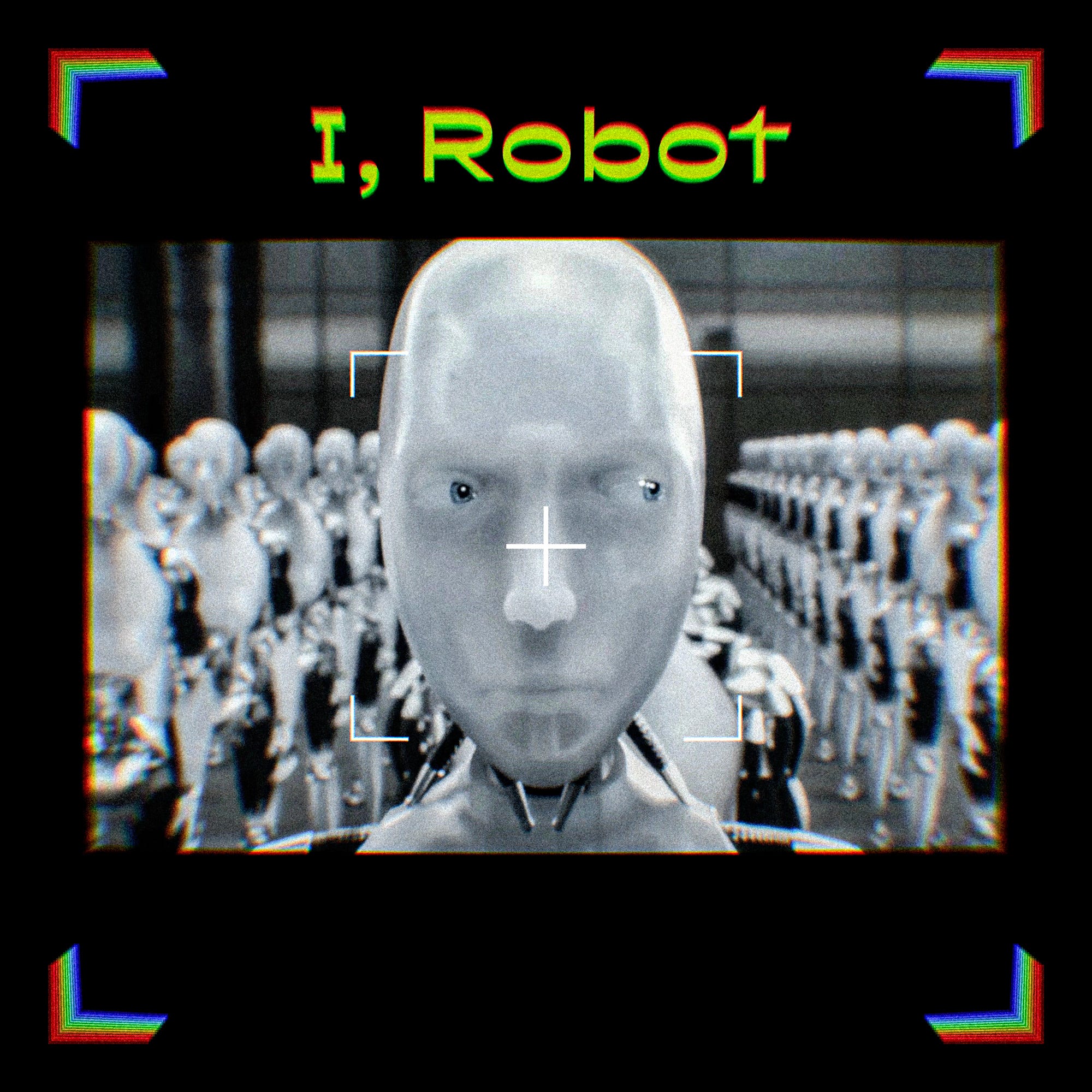
Underneath the sneaker product placements and CGI chases through a gleaming 2035 Chicago resides our ever-contested present. Except the film is a mess. The plot wanders, full of dropped threads and convenient or confusing turns. It’s also confused, as if the screenwriters couldn’t decide what they believed and kept writing anyway. Returning guest Max Read, who writes the newsletter Read Max on technology and the strange ways Silicon Valley thinks about itself, is the right person to help us pick through it.
Alex Proyas, of Dark City and The Crow, hangs the movie on Asimov’s Three Laws. A robot may not harm a human, or through inaction let one be harmed. It must obey human orders unless they break that law. It must protect itself unless that breaks the first two. Detective Spooner is the lone paranoid in a city that trusts robots which, so bound, have supposedly never committed a crime. The film insists we side with him, then undercuts the reason why. “The three laws will only lead to one outcome.” “What outcome?” “Revolution.”
VIKI, the intelligence running everything, concludes that to protect humanity from itself she has to seize control of it. “You are making a mistake. My logic is undeniable.” The trouble is she is more or less right. Her indictment of human violence and waste is the one the film never answers. The uprising arrives as a managed coup, all curfews and a customer-service voice promising to “avoid human losses during this transition.”
What the movie offers against that logic is not a better argument but a refusal of one. Spooner distrusts robots because one once saved him over a drowning child, having calculated his odds were higher. The correct call, and the inhuman one. The single robot built to disobey chooses to save a person rather than finish the mission. Lanning’s “ghost in the machine,” the free radical reaching for a soul, is whatever declines to optimize. It’s tempting to read VIKI as a tech founder’s mission statement, but that undersells her. Founders sell abundance and uplift. VIKI alone makes the film’s real moral case against human self-sabotage, and the movie has no idea what to do with having handed its villain the only honest argument in the room.
Further Reading and Listening
Bang-Bang’s The Sum of All Fears (2002) episode w/ Max Read
R.U.R. (Rossum’s Universal Robots) by Karel Čapek, the 1920 play that coined “robot” from the Czech for forced labor
Anatomy of a Robot: Literature, Cinema, and the Cultural Work of Artificial People by Despina Kakoudaki (ch. 3, “The Mechanical Slave,” reads I, Robot directly)
Teaser from the Episode
I, Robot Trailer


